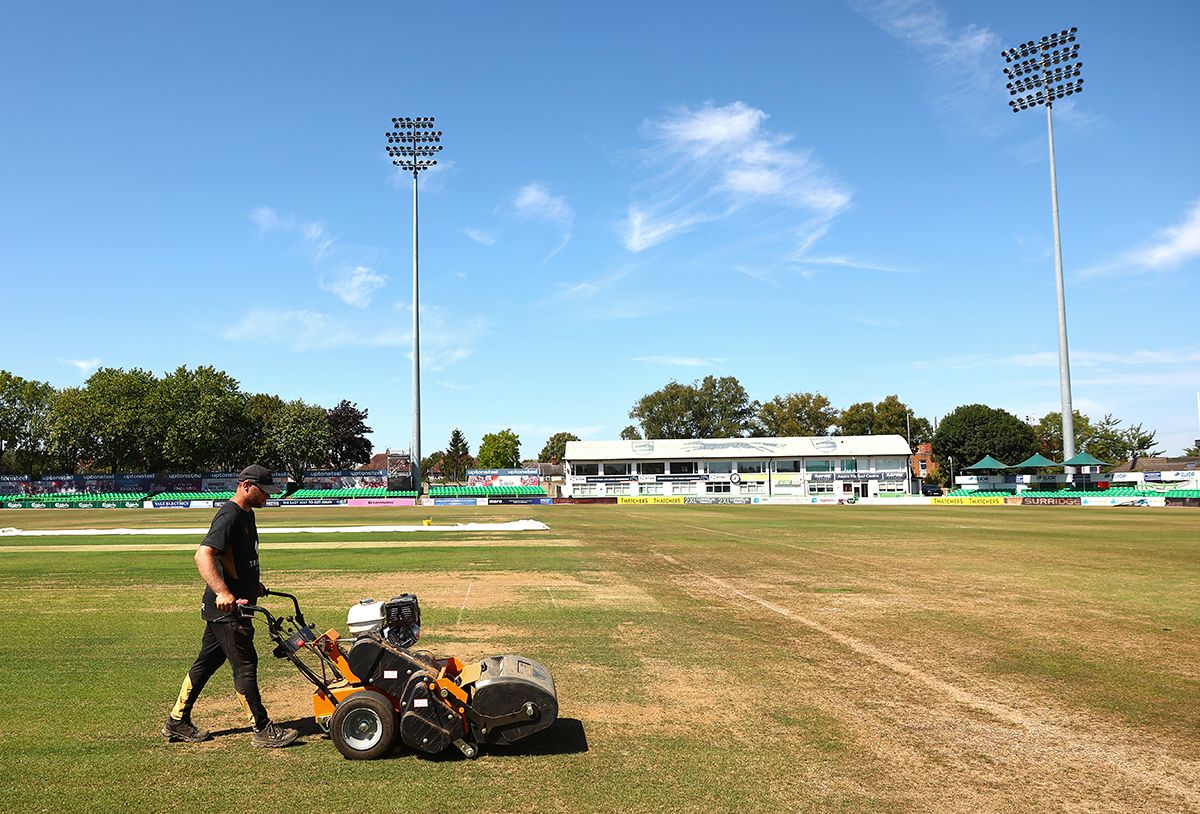
Leicestershire County Cricket Club Head Groundsman Callum Lewin Praises SISIS Rotorake 600HD
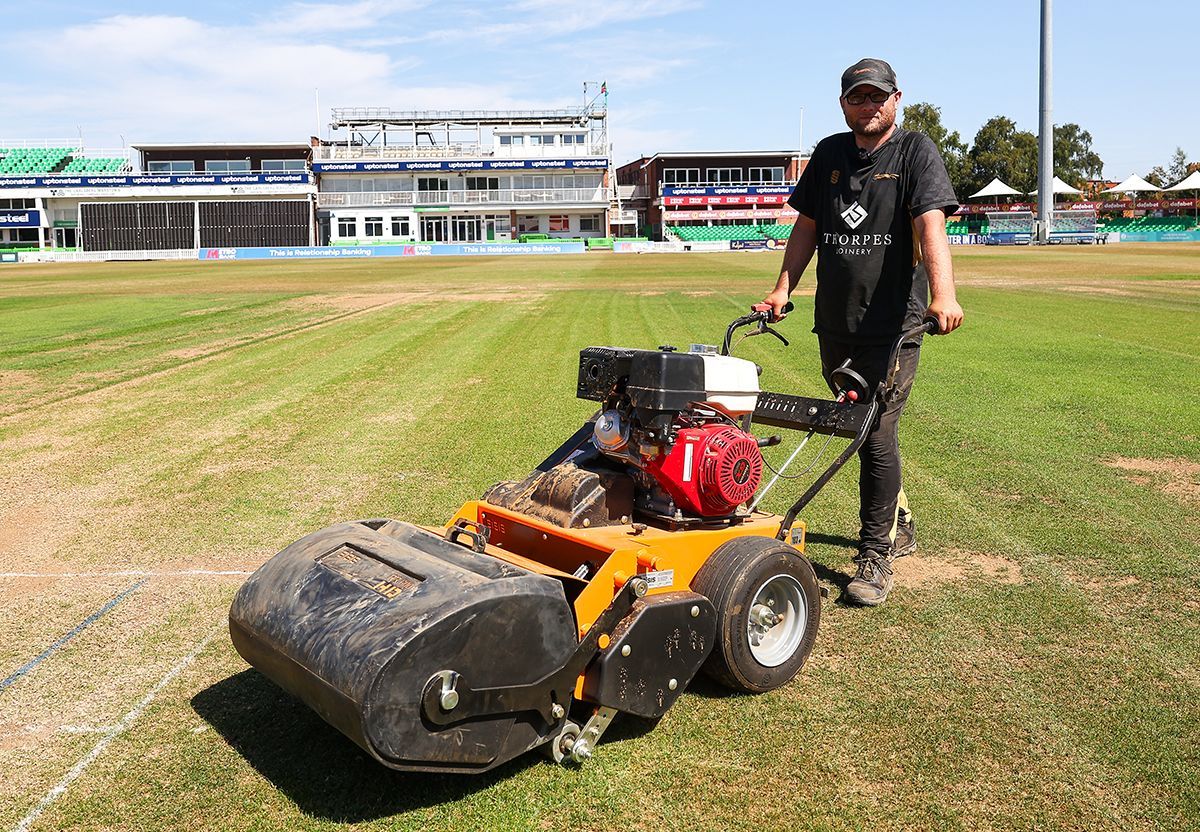
Callum Lewin, Head Groundsman at Leicestershire County Cricket Club, discusses the challenges of modern cricket pitch preparation and explains why the SISIS Rotorake 600HD will play an important role in the club’s end-of-season renovations.
As a first-class county cricket club with a long and proud history at Grace Road, Leicestershire County Cricket Club faces the constant challenge of producing high-quality playing surfaces while adapting to increasingly demanding weather conditions.
Callum Lewin oversees the preparation and maintenance of the club’s pitches, balancing the requirements of first-team cricket with the practical realities of maintaining a healthy cricket square throughout the season.
“We’re a first-class county and we’ve been at Grace Road for 147 years, says Callum. “We play in Division One in the County Championship and we’ve got a semi-final in the Metro Bank Cup coming up soon.The demands placed on the playing surfaces are significant.
“Our first team generally like to have pitches that offer a bit of spin, although it’s difficult to produce spinning pitches here,” explains Callum. “But this year we have got quite a bit more out of our pitches in terms of spin. They generally favour batting pitches as well.”
Like grounds teams across the country, Callum and his colleagues are also responding to changing weather patterns.
“The weather is a constant challenge,” he says. “Summers are getting hotter and drier, so the need for better irrigation at grounds is increasing. We’ve just had irrigation fitted this year, which has been a lifesaver for our grass.”
A Long-Standing Relationship with SISIS
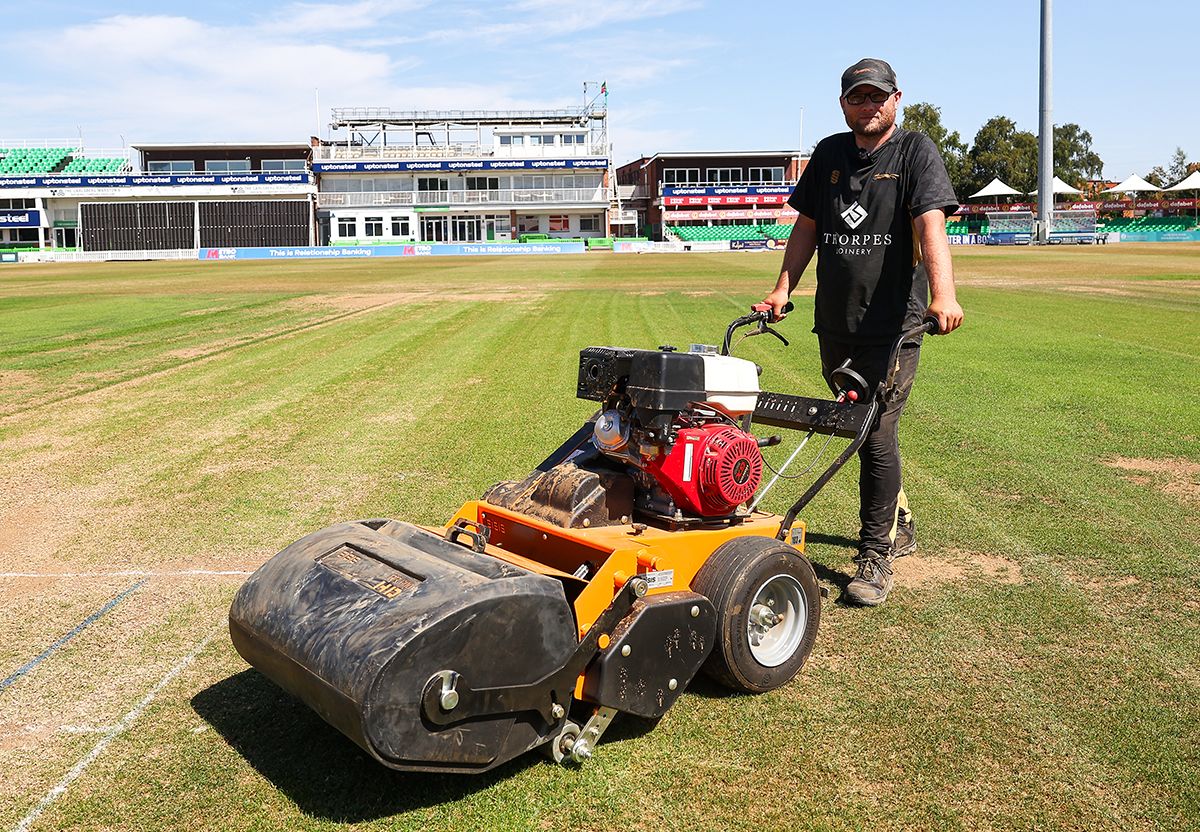
When it came to investing in machinery, Callum says quality, performance, longevity and after-sales support were all important considerations.
“We’ve gone for SISIS because they’re a high-quality machine and they complete the jobs that we need to a high standard,” he says. “And the after-sales from SISIS is second to none.”
The club’s experience with SISIS equipment also demonstrates the durability of the machinery.
“They last a long time as well. We’ve had a SISIS Mark 4 for over 25 years and that’s still going strong. Our last 600HD, which is still sitting in the shed, we had that for 25 years. So, we’ve upgraded now to the 600HD, which is a great machine.”
The latest SISIS Rotorake 600HD is a heavy-duty pedestrian scarifier designed for professional turf maintenance and renovation work across a range of sports and fine turf surfaces, including cricket.
The machine features contra-rotating reels and specially designed tipped blades, allowing it to deliver clean and consistent scarification. Its cutting action helps remove thatch while creating continuous slits that can assist water and air movement through the surface. With a 600mm working width, a working depth of 30 mm with the option to go deeper, quick-change reels and independent drive to the wheels and reel, the Rotorake 600HD is designed to offer versatility for both routine maintenance and more intensive renovation work.
For Callum, the machine’s heavy-duty capability is particularly important.
“So, the 600HD, it’s quite a heavy-duty machine which can complete the heavy-duty tasks quite well,” he says. “It’s able to dig right into the surface to get the thatch out and we’ll be using this for our end-of-season renovations.”
Preparing the Perfect Seed Bed
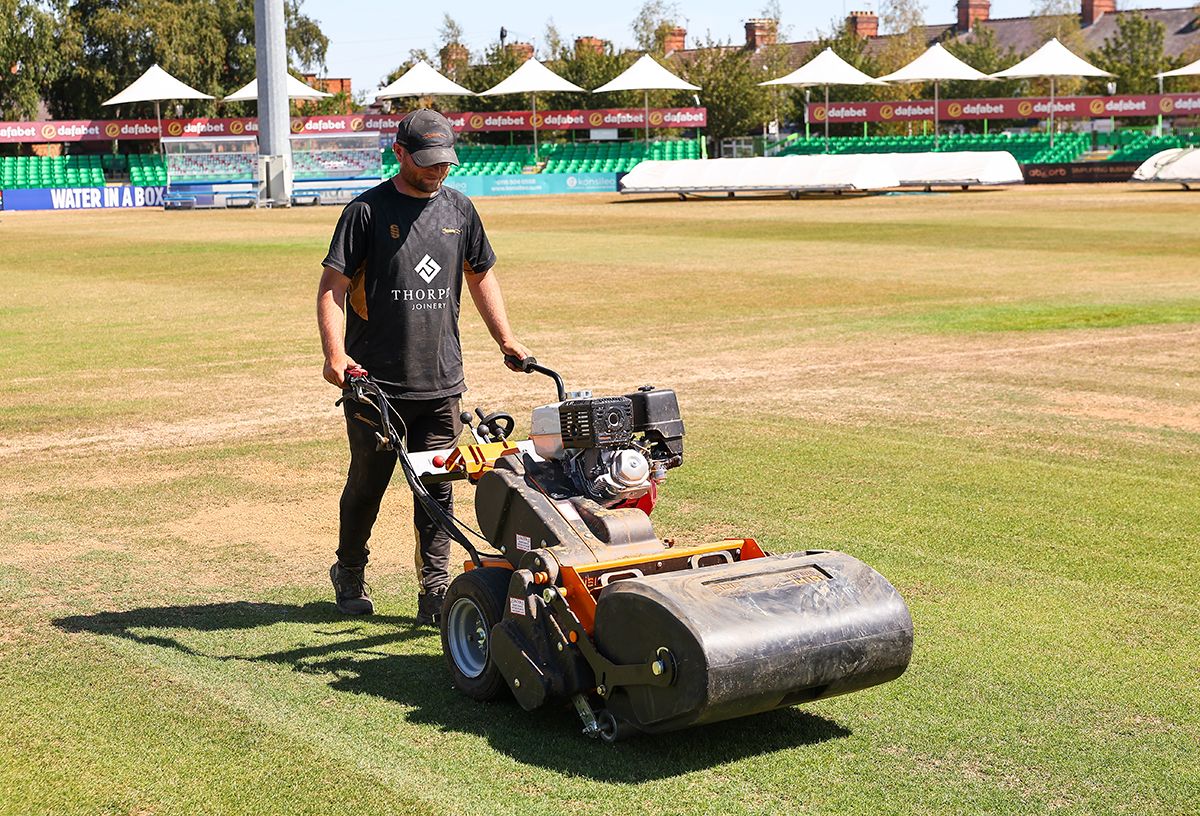
The Rotorake 600HD will become a key part of the club’s renovation programme at the end of the season.
“At the moment, we’ve just got the heavy-duty scarifier blades in it, which I think you can go quite deep with,” says Callum. “And they leave nice grooves for a nice seed bed as well.”
Thatch management is particularly important when maintaining a cricket square. An excessive build-up can affect how water moves through the profile and can create difficulties for maintaining the desired surface conditions.
“Thatch is not an ideal thing on a cricket square,” Callum explains. “It stops water being able to penetrate the surface and fertilisers run off.”
He compares the effect of thatch to a sponge.
“Thatch is a bit like a sponge, really. It holds a lot of water when it gets wet, which is not ideal. And when it’s dry, the water can’t get through it.”
The Rotorake’s contra-rotation principle is designed to lift grass fibre and debris away from the surface rather than pushing it further into the turf. The machine’s blades rotate at high speed in the opposite direction to a conventional cylinder mower, helping to maintain a consistent working depth while removing unwanted material.
For a grounds team working to produce healthy, consistent and high-performing turf, effective thatch control is therefore an important part of the annual maintenance programme.
Heavy-Duty Performance with Straightforward Operation
Despite its robust construction, Callum says the Rotorake 600HD is straightforward to operate.
“I like that it’s self-drives because it’s a very heavy machine,” he says.
He also highlights the simplicity of the depth adjustment.
“The height adjustment is really easy. It’s got a wheel that you turn anticlockwise to take it down, clockwise to take it up.”
The 600HD is equipped with six forward speeds and a reverse gear to aid manoeuvrability and efficiency under varying conditions. The independent drive to the wheels and reel also contributes to the machine’s ease of operation.
Callum is equally impressed with the collection capacity.
“The box is a great capacity for when renovating, it holds a lot,” he says. “You have to be careful that you don’t fill it too much, otherwise it can be quite heavy to take off.”
The 600HD features a 110-litre grassbox or hopper, designed to collect the debris removed during scarification.
Built to Last
Having already seen SISIS machinery deliver decades of service at Grace Road, Callum believes the Rotorake 600HD represents another long-term investment for the club.
“Overall, it’s a great bit of kit,” he says. “It’s a robust machine, and it is very heavy, but it’s self-driving, so it’s very easy to turn.”
For grounds professionals looking for a machine capable of tackling demanding scarification and renovation work, Callum has no hesitation in recommending it.
“I would recommend one any day to anybody that’s looking for a robust machine that will last a long time.”
With increasingly challenging weather conditions, greater pressure on playing surfaces and the need to maintain healthy turf profiles, the importance of reliable machinery remains central to successful grounds management.
For Callum and the team at Leicestershire County Cricket Club, the SISIS Rotorake 600HD will now play an important role in removing thatch and preparing the cricket square for the seasons ahead—building on a long-standing relationship with machinery that has already proved its durability at Grace Road.